Source: Northwestern University
Date: March 13, 2007
More on: Acoustics, Language Acquisition, Perception, Child Development, Intelligence, Neuroscience
Science Daily — A newly published study by Northwestern University researchers suggests that Mom was right when she insisted that you continue music lessons -- even after it was clear that a professional music career was not in your future.
The study, which will appear in the April issue of Nature Neuroscience, is the first to provide concrete evidence that playing a musical instrument significantly enhances the brainstem's sensitivity to speech sounds. This finding has broad implications because it applies to sound encoding skills involved not only in music but also in language.
The findings indicate that experience with music at a young age in effect can "fine-tune" the brain's auditory system. "Increasing music experience appears to benefit all children -- whether musically exceptional or not -- in a wide range of learning activities," says Nina Kraus, director of Northwestern's Auditory Neuroscience Laboratory and senior author of the study.
"Our findings underscore the pervasive impact of musical training on neurological development. Yet music classes are often among the first to be cut when school budgets get tight. That's a mistake," says Kraus, Hugh Knowles Professor of Neurobiology and Physiology and professor of communication sciences and disorders.
"Our study is the first to ask whether enhancing the sound environment -- in this case with musical training -- will positively affect the way an individual encodes sound even at a level as basic as the brainstem," says Patrick Wong, primary author of "Musical Experience Shapes Human Brainstem Encoding of Linguistic Pitch Patterns." An old structure from an evolutionary standpoint, the brainstem once was thought to only play a passive role in auditory processing.
Using a novel experimental design, the researchers presented the Mandarin word "mi" to 20 adults as they watched a movie. Half had at least six years of musical instrument training starting before the age of 12. The other half had minimal (less than 2 years) or no musical training. All were native English speakers with no knowledge of Mandarin, a tone language.
In tone languages, a single word can differ in meaning depending on pitch patterns called "tones." For example, the Mandarin word "mi" delivered in a level tone means "to squint," in a rising tone means "to bewilder," and in a dipping (falling then rising) tone means "rice." English, on the other hand, only uses pitch to reflect intonation (as when rising pitch is used in questions).
As the subjects watched the movie, the researchers used electrophysiological methods to measure and graph the accuracy of their brainstem ability to track the three differently pitched "mi" sounds.
"Even with their attention focused on the movie and though the sounds had no linguistic or musical meaning for them, we found our musically trained subjects were far better at tracking the three different tones than the non-musicians," says Wong, director of Northwestern's Speech Research Laboratory and assistant professor of communication sciences and disorders.
The research by co-authors Wong, Kraus, Erika Skoe, Nicole Russo and Tasha Dees represents a new way of defining the relationship between the brainstem -- a lower order brain structure thought to be unchangeable and uninvolved in complex processing -- and the neocortex, a higher order brain structure associated with music, language and other complex processing.
These findings are in line with previous studies by Wong and his group suggesting that musical experience can improve one's ability to learn tone languages in adulthood and level of musical experience plays a role in the degree of activation in the auditory cortex. Wong also is a faculty member in Northwestern's Interdepartmental Neuroscience Program.
The findings also are consistent with studies by Kraus and her research team that have revealed anomalies in brainstem sound encoding in some children with learning disabilities which can be improved by auditory training.
"We've found that by playing music -- an action thought of as a function of the neocortex -- a person may actually be tuning the brainstem," says Kraus. "This suggests that the relationship between the brainstem and neocortex is a dynamic and reciprocal one and tells us that our basic sensory circuitry is more malleable than we previously thought."
Overall, the findings assist in unfolding new lines of inquiry. The researchers now are looking to find ways to "train" the brain to better encode sound -- work that potentially has far-reaching educational and clinical implications. The study was supported by Northwestern University, grants from the National Institutes of Health and a grant from the National Science Foundation.
Note: This story has been adapted from a news release issued by Northwestern University.
Copyright © 1995-2007 ScienceDaily LLC
http://www.disdcoverytoyslink.com/michelemarchetti
Friday, July 27, 2007


Thursday, July 26, 2007
Toy Recommendations Based on Your Needs!
Discovery Toys extensive line of educational toys provides for children. Here are some recommended toys. Please email me to answer your toy questions and make any recommendations you desire!
Hearing Skills:
Curly & Pals
Early Twirly
Rolling Reflections
Sunny Sounds
Sonic Sounds
Sounds Like Fun CD
Social Skills:
6 in 1 Play Center
AB Seas
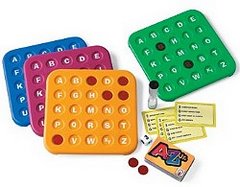
A to Z Jr.
Animal Twins
Hoppity Pop
Net Catch
Zip Track Rally
Communication Skills:
Baby Signs
Build a Book
One Upon a Time
Shiny, Touchy, Smelly
Opposite Pairs
Zingo
Wiz Kidz
Balance & Coordination:
Light Up Lady Bug
Castle Marbleworks
Tangiball
Hammer Away
Balance Buddies
Reading Readiness:
Giant Pegboard
Busy Bugs
ABC Box
www.discoverytoyslink.com/michelemarchetti
Hearing Skills:
Curly & Pals
Early Twirly
Rolling Reflections
Sunny Sounds
Sonic Sounds
Sounds Like Fun CD
Social Skills:
6 in 1 Play Center
AB Seas
A to Z Jr.
Animal Twins
Hoppity Pop
Net Catch
Zip Track Rally
Communication Skills:
Baby Signs
Build a Book
One Upon a Time
Shiny, Touchy, Smelly
Opposite Pairs
Zingo
Wiz Kidz
Balance & Coordination:
Light Up Lady Bug
Castle Marbleworks
Tangiball
Hammer Away
Balance Buddies
Reading Readiness:
Giant Pegboard
Busy Bugs
ABC Box
www.discoverytoyslink.com/michelemarchetti
The Benefits of Music to Your Children!
Discovery Toys offers an extensive line of musical and movement products, Do-Re-Me and You. This line, designed by Kindermusik is AWESOME!!!! Each set has a book and CD with over 60 minutes of music. Some sets also include
Here is great information about the value of music. I got all these facts from www.tesh.com
Studies show that learning to play an instrument has significant long-term benefits for kids. Researchers at the University of California found that kids who took music lessons scored 27% higher on math tests, and 57 points higher on the SAT's verbal section. So why are the musically inclined a bit brainier? Because, according to Canada's McMaster University, learning to play an instrument develops the reasoning and spatial centers in the brain. Music also maximizes brain development in the areas related to language and social skills.
To prove the point, a comprehensive series of skill tests were done on 5-thousand 5th graders. And in every single test area, kids who were learning to play a musical instrument received higher marks than their classmates. And the longer they had been studying music, the higher they scored. The American Music Conference reports that kids who play an instrument are 52 percent more likely to go on to college than non-music makers. And kids who play music watch less TV and are more optimistic. So here's how to get your kids hooked on music. I found this in Prevention magazine.
Be sure to start early. Young kids are fascinated with sound, and as they hear new instruments and rhythms, it sparks the connections between their brain cells, helping them learn faster. So, sign your preschooler up for a music and movement class.
Also, if your child is outgoing, have them play their favorite songs they've learned when friends and family come over to visit. Studies show that when kids show off a new skill, it builds their self-confidence.
You can view and purchase the entire line of music products at my webpage, www.discoverytoyslink.com/Michelemarchetti
Michele Marchetti
203-672-0681
Here is great information about the value of music. I got all these facts from www.tesh.com
Studies show that learning to play an instrument has significant long-term benefits for kids. Researchers at the University of California found that kids who took music lessons scored 27% higher on math tests, and 57 points higher on the SAT's verbal section. So why are the musically inclined a bit brainier? Because, according to Canada's McMaster University, learning to play an instrument develops the reasoning and spatial centers in the brain. Music also maximizes brain development in the areas related to language and social skills.
To prove the point, a comprehensive series of skill tests were done on 5-thousand 5th graders. And in every single test area, kids who were learning to play a musical instrument received higher marks than their classmates. And the longer they had been studying music, the higher they scored. The American Music Conference reports that kids who play an instrument are 52 percent more likely to go on to college than non-music makers. And kids who play music watch less TV and are more optimistic. So here's how to get your kids hooked on music. I found this in Prevention magazine.
Be sure to start early. Young kids are fascinated with sound, and as they hear new instruments and rhythms, it sparks the connections between their brain cells, helping them learn faster. So, sign your preschooler up for a music and movement class.
Also, if your child is outgoing, have them play their favorite songs they've learned when friends and family come over to visit. Studies show that when kids show off a new skill, it builds their self-confidence.
You can view and purchase the entire line of music products at my webpage, www.discoverytoyslink.com/Michelemarchetti
Michele Marchetti
203-672-0681
Monday, July 23, 2007
Discovery toys has partnered with Hasbro!!
Did you know that Discovery Toys has partnered with Hasbro/ Playschool wow!!
I am so excited that this is happening. Everyone knows playschool and now you can get more stuff at our parties!! We have shutes and ladders, weebles, scooters, and deluxe wooden scrabble games now!! Hurry book a party and get these great toys for free and have a $250 party and get the deluxe scrabble for $30 wahoo!! We also have a back to school sale!! See the new flyer call me for more information!!! We are having our great convention in New Orleans next year and we are building houses wahooo!!!! We have a great mission!! 203-672-0681 Call now to book your party for fall is filling fast!!
fshngqueen@aol.com
Michele Marchetti
Therapeutic Recreational Specialist and Group Manager for Discovery Toys!!
http://www.discoverytoyslink.com/michelemarchetti
I am so excited that this is happening. Everyone knows playschool and now you can get more stuff at our parties!! We have shutes and ladders, weebles, scooters, and deluxe wooden scrabble games now!! Hurry book a party and get these great toys for free and have a $250 party and get the deluxe scrabble for $30 wahoo!! We also have a back to school sale!! See the new flyer call me for more information!!! We are having our great convention in New Orleans next year and we are building houses wahooo!!!! We have a great mission!! 203-672-0681 Call now to book your party for fall is filling fast!!
fshngqueen@aol.com
Michele Marchetti
Therapeutic Recreational Specialist and Group Manager for Discovery Toys!!
http://www.discoverytoyslink.com/michelemarchetti
Monday, July 16, 2007
Alzheimer's and recreation and fun for families!!
Here is some general info on Alzheimer's and a couple of things that work well with them are music and art therapy. Another thing is familar things. Patients that I have dealt with that have alzheimers often will not follow direct commands. If you tell them to sit up and eat or walk, etc. they will just look at you with a blank stare, they might smile or just do nothing. Like they just don't understand. But if you get them up on their feet and kinda get them moving, then they would walk or if you handed them a toothbrush and toothpaste they would know to brush their teeth...things they know from the past often they just do naturally. This is of course not always the case in advanced patients. Each patient is of course different. They can become easily agitated and they may believe things that are not true...if you disagree with them then they can become agitated. Often they have difficulty expressing themselves, language can be repetitive and they often get stuck on the same phrase and say it over and over. So with all that...some things you might suggest are some of our musical cds that have common things...like head, shoulders, knees and toes or any with things that would be familiar to most. I would not suggest games that are difficult to learn as the patient would be hard to teach a new skill unless they were just a mild case. Things like easy puzzles..Opposite pairs. Or giant pegboard might be good. Toddler talk...since they will recognize the phone and its sounds and know what it is. Color, Craft and Carry might be good for the art therapy. Music makes my day DVD. They might like the Rainfall Rattle. Place and trace...easy puzzle and could use for artwork if they were a mild case. Sounds like Fun CD could be calming music. Playful patterns if a mild case might work. Starting Write or I Can Write. Possibly ABSeas.. fishing common activity and for mild case might enjoy playing the game. Sensory balls like tangiball and roll-a rama. Hammer Away might be another common activity since it involves hammering. Castlemarbleworks ...not so much the building part, but dropping the balls down some might enjoy. Hope this helps. These are just suggestions. Like I said each patient is different, so talk about the things common to Alzheimers and let the therapist or the director make the choices. If I were to bring some things to show...some of these might be good. I am a recreational specialist in nuirsing homes call me for more information!!
Alzheimer's and Your Loved One
Symptoms
Alzheimer's disease is the most common form of dementia. It's a progressive disease that gets worse with time. Alzheimer's does not affect each person the same way. But, there are some symptoms that usually happen as the disease progresses. Here is a list of some of the symptoms:
Alzheimer's progresses in stages over 8 to 10 years, on average, after diagnosis
Mild Alzheimer's disease
People with mild Alzheimer's disease may:
Have memory loss
Have trouble naming common items
Ask or say the same thing over and over
Get lost easily
Lose interest in things they once liked to do
Lose things more often than normal
Have personality changes
Moderate Alzheimer's disease
People with moderate Alzheimer's disease may:
Have poor memory of recent events
Have trouble with tasks such as washing dishes or setting the table
Have a hard time dressing for the weather or occasion
Forget to shave or shower
Argue more often
Believe things are real when they are not
Wander, often at night
Be worried or depressed
Need close supervision
Severe Alzheimer's disease
People with severe Alzheimer's disease may:
Have problems with eating
Have problems with speech or not speak at all
Not recognize you or other family members
Not be able to control bowels or urine
Have problems with walking
Enjoying Time With Your Loved One
While caring for your loved one may take a lot of time, you should still try to find time just for sharing life's simple moments. Finding things you and your loved one can do together can be hard. But it's worth it. Like you, people with Alzheimer's disease may enjoy doing activities that interest them.
Plus, events and activities may help your loved one enjoy life each day.
When you look for things to do, don't forget that Alzheimer's makes it hard to focus or learn new skills. Some people with Alzheimer's like to spend time on things that they enjoyed in the past. With your help, your loved one may still enjoy a hobby or pastime that was once a favorite. When you can, try to build on current skills. This may work better than trying to teach new skills.
Enjoying time together
Here are some things you and your loved one may enjoy:
Looking at photos
Talking about family history
Making a scrapbook
Playing simple games
Working puzzles
Listening to music together
It may also help to add light exercise to your loved one's day. Be sure to ask the doctor first. It may help your loved one sleep better, and it might be helpful to your mood.
No matter what you choose, try to:
Break each task into small steps
Give praise each step of the way
Watch for signs that your loved one is tired, so you can take a break
Make time to enjoy simple moments together at the same time each day
Tips I have found:
THE SECRET POWER OF ART
People who can no longer use words can express their deepest feelings, through the symbolic language of art.
Discover the groundbreaking book about art therapy for Alzheimer's disease:
When Words Have Lost Their Meaning:
Alzheimer's Patients Communicate through Art
After many years' experience as an art therapist to Alzheimer's patients, Ruth Abraham now offers an encouraging guide to communicating despite dementia.
Are you a psychologist, occupational therapist, healthcare or social worker, friend or family to an Alzheimer's sufferer? Find out how to engage with and celebrate each person's individuality and humanness for far longer than previously thought.
Art therapy draws on the rich resources of a lifetime — the temperament, emotions, experiences, and memories that make up one's internal world — that are still present for many years of the disease and provide material for profound communion.
Unfortunately, medical science has not yet provided any effective long-term treatment for Alzheimer's disease. In the absence of a much-hoped-for miracle drug, it is our responsibility to find ways to enhance the lives of those stricken with the illness. Current major therapeutic approaches consist of practical and emotional support and of strategies that help strengthen remaining capacities. Art therapy, a relatively new resource, sets out to do exactly these things, offering an additional means to bolster the humanity of the Alzheimer's patient. Art therapy proves to be a powerful medium because it bypasses the dominant verbal aspects of brain function. The work is based on the assumption that in spite of deterioration and advancing limitations, the dementia patient is nevertheless a person with an interior subjective world. The afflicted person, overwhelmed by an inability to articulate, can give voice to this inner world through the use of art materials. In providing that person with the symbolic language of art, an alternative channel for communication is opened. This is a vital gift when words have lost their meaning. ~~~quoted from the book When Words have Lost their Meaning by Ruth Abraham.
Music is a form of sensory stimulation, which provokes responses due to the familiarity, predictability, and feelings of security associated with it.
Participants without a music background can benefit from music therapy.
Music therapy provides opportunities for:
Memory recall which contributes to reminiscence and satisfaction with life
Positive changes in mood and emotional states
Sense of control over life through successful experiences
Awareness of self and environment which accompanies increased attention to music
Anxiety and stress reduction for older adult and caregiver
Nonpharmacological management of pain and discomfort
Stimulation which provokes interest even when no other approach is effective
Structure which promotes rhythmic and continuous movement or vocal fluency as an adjunct to physical rehabilitation
Emotional intimacy when spouses and families share creative music experiences
Social interaction with caregivers and families
Is There Research To Support Music Therapy For Persons with Alzheimer's Disease?
Through peer-reviewed journals inside the profession such as the Journal of Music Therapy, Music Therapy, and Music Therapy Perspectives, and extensive articles in journals outside the profession, AMTA has promoted much research exploring the benefits of music therapy for persons with Alzheimer's Disease.
Research Highlights
Music therapy reduces depression among older adults.
Music experiences can be structured to enhance social/emotional skills, to assist in recall and language skills and to decrease problem behaviors.
Music tasks can be used to assess cognitive ability in people with Alzheimer's Disease.
Music is effective in decreasing the frequency of agitated and aggressive behaviors for individuals diagnosed with Alzheimer's Disease and related dementias.
Individuals in the late stages of dementia respond to and interact with music.
Michele Marchetti
203-672-0681
www.discoverytoyslink.com/michelemarchetti
Alzheimer's and Your Loved One
Symptoms
Alzheimer's disease is the most common form of dementia. It's a progressive disease that gets worse with time. Alzheimer's does not affect each person the same way. But, there are some symptoms that usually happen as the disease progresses. Here is a list of some of the symptoms:
Alzheimer's progresses in stages over 8 to 10 years, on average, after diagnosis
Mild Alzheimer's disease
People with mild Alzheimer's disease may:
Have memory loss
Have trouble naming common items
Ask or say the same thing over and over
Get lost easily
Lose interest in things they once liked to do
Lose things more often than normal
Have personality changes
Moderate Alzheimer's disease
People with moderate Alzheimer's disease may:
Have poor memory of recent events
Have trouble with tasks such as washing dishes or setting the table
Have a hard time dressing for the weather or occasion
Forget to shave or shower
Argue more often
Believe things are real when they are not
Wander, often at night
Be worried or depressed
Need close supervision
Severe Alzheimer's disease
People with severe Alzheimer's disease may:
Have problems with eating
Have problems with speech or not speak at all
Not recognize you or other family members
Not be able to control bowels or urine
Have problems with walking
Enjoying Time With Your Loved One
While caring for your loved one may take a lot of time, you should still try to find time just for sharing life's simple moments. Finding things you and your loved one can do together can be hard. But it's worth it. Like you, people with Alzheimer's disease may enjoy doing activities that interest them.
Plus, events and activities may help your loved one enjoy life each day.
When you look for things to do, don't forget that Alzheimer's makes it hard to focus or learn new skills. Some people with Alzheimer's like to spend time on things that they enjoyed in the past. With your help, your loved one may still enjoy a hobby or pastime that was once a favorite. When you can, try to build on current skills. This may work better than trying to teach new skills.
Enjoying time together
Here are some things you and your loved one may enjoy:
Looking at photos
Talking about family history
Making a scrapbook
Playing simple games
Working puzzles
Listening to music together
It may also help to add light exercise to your loved one's day. Be sure to ask the doctor first. It may help your loved one sleep better, and it might be helpful to your mood.
No matter what you choose, try to:
Break each task into small steps
Give praise each step of the way
Watch for signs that your loved one is tired, so you can take a break
Make time to enjoy simple moments together at the same time each day
Tips I have found:
THE SECRET POWER OF ART
People who can no longer use words can express their deepest feelings, through the symbolic language of art.
Discover the groundbreaking book about art therapy for Alzheimer's disease:
When Words Have Lost Their Meaning:
Alzheimer's Patients Communicate through Art
After many years' experience as an art therapist to Alzheimer's patients, Ruth Abraham now offers an encouraging guide to communicating despite dementia.
Are you a psychologist, occupational therapist, healthcare or social worker, friend or family to an Alzheimer's sufferer? Find out how to engage with and celebrate each person's individuality and humanness for far longer than previously thought.
Art therapy draws on the rich resources of a lifetime — the temperament, emotions, experiences, and memories that make up one's internal world — that are still present for many years of the disease and provide material for profound communion.
Unfortunately, medical science has not yet provided any effective long-term treatment for Alzheimer's disease. In the absence of a much-hoped-for miracle drug, it is our responsibility to find ways to enhance the lives of those stricken with the illness. Current major therapeutic approaches consist of practical and emotional support and of strategies that help strengthen remaining capacities. Art therapy, a relatively new resource, sets out to do exactly these things, offering an additional means to bolster the humanity of the Alzheimer's patient. Art therapy proves to be a powerful medium because it bypasses the dominant verbal aspects of brain function. The work is based on the assumption that in spite of deterioration and advancing limitations, the dementia patient is nevertheless a person with an interior subjective world. The afflicted person, overwhelmed by an inability to articulate, can give voice to this inner world through the use of art materials. In providing that person with the symbolic language of art, an alternative channel for communication is opened. This is a vital gift when words have lost their meaning. ~~~quoted from the book When Words have Lost their Meaning by Ruth Abraham.
Music is a form of sensory stimulation, which provokes responses due to the familiarity, predictability, and feelings of security associated with it.
Participants without a music background can benefit from music therapy.
Music therapy provides opportunities for:
Memory recall which contributes to reminiscence and satisfaction with life
Positive changes in mood and emotional states
Sense of control over life through successful experiences
Awareness of self and environment which accompanies increased attention to music
Anxiety and stress reduction for older adult and caregiver
Nonpharmacological management of pain and discomfort
Stimulation which provokes interest even when no other approach is effective
Structure which promotes rhythmic and continuous movement or vocal fluency as an adjunct to physical rehabilitation
Emotional intimacy when spouses and families share creative music experiences
Social interaction with caregivers and families
Is There Research To Support Music Therapy For Persons with Alzheimer's Disease?
Through peer-reviewed journals inside the profession such as the Journal of Music Therapy, Music Therapy, and Music Therapy Perspectives, and extensive articles in journals outside the profession, AMTA has promoted much research exploring the benefits of music therapy for persons with Alzheimer's Disease.
Research Highlights
Music therapy reduces depression among older adults.
Music experiences can be structured to enhance social/emotional skills, to assist in recall and language skills and to decrease problem behaviors.
Music tasks can be used to assess cognitive ability in people with Alzheimer's Disease.
Music is effective in decreasing the frequency of agitated and aggressive behaviors for individuals diagnosed with Alzheimer's Disease and related dementias.
Individuals in the late stages of dementia respond to and interact with music.
Michele Marchetti
203-672-0681
www.discoverytoyslink.com/michelemarchetti
Sunday, July 15, 2007
Rocket Start!
Rocket Start your business!
When you join my team, I will help you get your Discovery Toys business off and running! Your initial investment of $99 will get you the toys, catalogs and materials you'll need to get your business started (over $300 value)! You can get started with just a $25 deposit!
In the first 3 months of your business, Discovery Toys helps you rocket start your business by giving incentives for selling and recruiting. You'll earn coupons to get FREE TOYS from Discovery Toys based on your sales! You can even earn your start-up kit back for free! (I earned my kit back in the first month of my business by just doing a few parties!)
Discovery Toys continues to provide incentives like free Convention Registration (a $199 value) and a trip to Disneyland for 4 days/3 nights for two! What are you waiting for!?!? Call me TODAY to start your business!
Michele Marchetti
203-672-0681
When you join my team, I will help you get your Discovery Toys business off and running! Your initial investment of $99 will get you the toys, catalogs and materials you'll need to get your business started (over $300 value)! You can get started with just a $25 deposit!
In the first 3 months of your business, Discovery Toys helps you rocket start your business by giving incentives for selling and recruiting. You'll earn coupons to get FREE TOYS from Discovery Toys based on your sales! You can even earn your start-up kit back for free! (I earned my kit back in the first month of my business by just doing a few parties!)
Discovery Toys continues to provide incentives like free Convention Registration (a $199 value) and a trip to Disneyland for 4 days/3 nights for two! What are you waiting for!?!? Call me TODAY to start your business!
Michele Marchetti
203-672-0681
Join the Amazing Team Jamoke' !!!
Join the Amazing Team Jamoke' (where the child plays)!
Have you ever thought about starting a fun, flexible, home-based business that lets you play for a living? If you have, then Discovery Toys is for you!
I am looking for people all over the country to join my team!
It only takes a $25 deposit to get started!
CALL ME to get more information or to JOIN MY TEAM! I will help you get your business off the ground and support you all the way! My number is 203-672-0681!
Michele Marchetti, your Discovery Toys Independent Group Manager.
www.discoverytoyslink.com/michelemarchetti
Have you ever thought about starting a fun, flexible, home-based business that lets you play for a living? If you have, then Discovery Toys is for you!
I am looking for people all over the country to join my team!
It only takes a $25 deposit to get started!
CALL ME to get more information or to JOIN MY TEAM! I will help you get your business off the ground and support you all the way! My number is 203-672-0681!
Michele Marchetti, your Discovery Toys Independent Group Manager.
www.discoverytoyslink.com/michelemarchetti
Subscribe to:
Posts (Atom)